Key takeaways
- Match identity, material form and required analytical specifications before ranking prices.
- A purity percentage is not a measurement of the peptide amount supplied.
- Price per milligram and total project spend can favor different quotes.
For laboratory research education only. Not medical advice or instructions for human or animal use. RetaSet supplies research materials and publishes this guide; catalog links lead to our own products.
What does the quoted price include?
Start with the written offer, not the largest number on the product card. Record the product identifier, stated quantity, number of containers, currency and any conditions attached to the price. Then note delivery charges and any taxes or fees that are actually specified for the destination.
A single-vial offer, a multipack and a custom synthesis quote are different purchasing units. Dividing all three by the number printed beside “mg” can hide minimum-order requirements or extra material the project does not need. If a charge is unknown, leave it unresolved rather than silently entering zero.
This guide compares research procurement terms. It does not quote current market prices or estimate the cost of a clinical treatment.
Make the denominator explicit
Bachem’s quality-control guide distinguishes chromatographic purity from net peptide content. Net content describes the peptidic fraction relative to non-peptidic material such as water and counterions; it can include peptide-related impurities. Those measurements therefore answer different questions.
For a BPC-157 quote, ask what the supplied quantity means: a nominal label claim, gross dry mass, measured peptide content or another explicitly defined basis. Do not invent a correction factor from a purity badge, and do not apply a second correction if the quoted quantity already incorporates an assay.
If one quote defines the amount and the other only gives a purity percentage, request the missing quantity basis before calculating cost per milligram.
A worked comparison with fictional prices
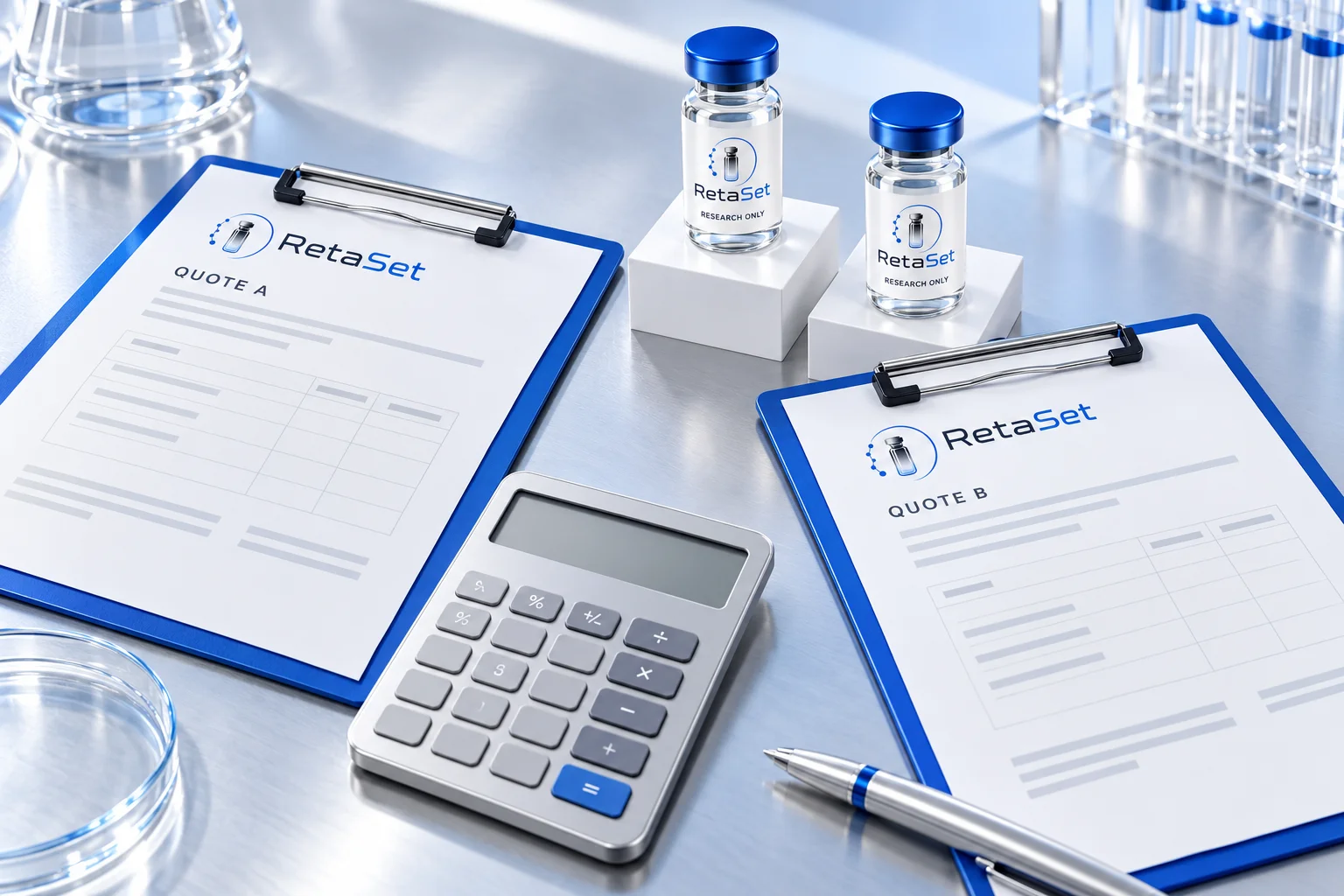
The following figures are invented solely to illustrate arithmetic. They are not RetaSet prices, competitor quotes or a market estimate. Assume both offers have already met the same required specifications and use the same quantity definition. The project needs 5 mg, and the remaining material in the larger pack has no planned use.
- Quote B is cheaper per stated milligram: €80 divided by 10 mg is €8/mg.
- Quote A requires €30 less total spending for the defined project.
- Neither calculation says anything about quality; equal suitability was an explicit assumption.
| Comparison item | Fictional quote A | Fictional quote B |
|---|---|---|
| Quantity in the purchasing unit | 5 mg | 10 mg |
| Material price | €40 | €65 |
| Delivery; assume no other charges | €10 | €15 |
| Total spend | €50 | €80 |
| Delivered cost per stated mg | €10 | €8 |
| Meets this 5 mg project requirement | Yes | Yes, with 5 mg left over |
A larger pack saves money only under the right assumptions
If a later approved project can use the remaining material, the larger purchasing unit may become more attractive. That decision needs a real plan and suitable storage and stability documentation. “We might use it someday” is not the same as a scheduled need.
Keep the arithmetic honest: price per milligram compares purchasing units, while project cost reflects what must actually be bought. Do not divide the larger pack’s price by only the amount used and call that the supplier’s unit price. Label it as cost allocated to this project.
The same discipline applies to discounts. A discount that requires several packs changes the order quantity. Record the total commitment beside the advertised saving.
Compare included evidence, not just the word tested
Analytical packages can differ. Bachem’s service description separates standard release testing from additional analyses such as net peptide content, water or acid content, sequence-related characterization and endotoxin testing. That is an example of why a single “tested” label does not define an identical service.
For your comparison, list the evidence required by the laboratory method and ask whether it is included, separately quoted or unavailable. Do not assume a higher price buys broader testing, or that a lower price indicates a failed test. The documents and scope of the offer must establish those facts.
Use one comparison sheet before choosing a quote
A short worksheet prevents repeated clarification later. It should preserve both the quoted facts and the open questions. Keep supplier statements distinct from independently reviewed results.
The decision comes after that comparison. If a required identity or analytical detail is missing, price ranking can wait. A precise calculation built on an uncertain specification is still an uncertain purchasing decision.
- Identity and material form: are both offers for the exact required substance?
- Quantity basis: what does each milligram claim represent?
- Required evidence: which lot-specific reports and methods are available?
- Commercial terms: what are the pack size, minimum order, currency and confirmed delivered total?
- Project fit: how much is needed, when, and what happens to unused material?
Where the catalog fits
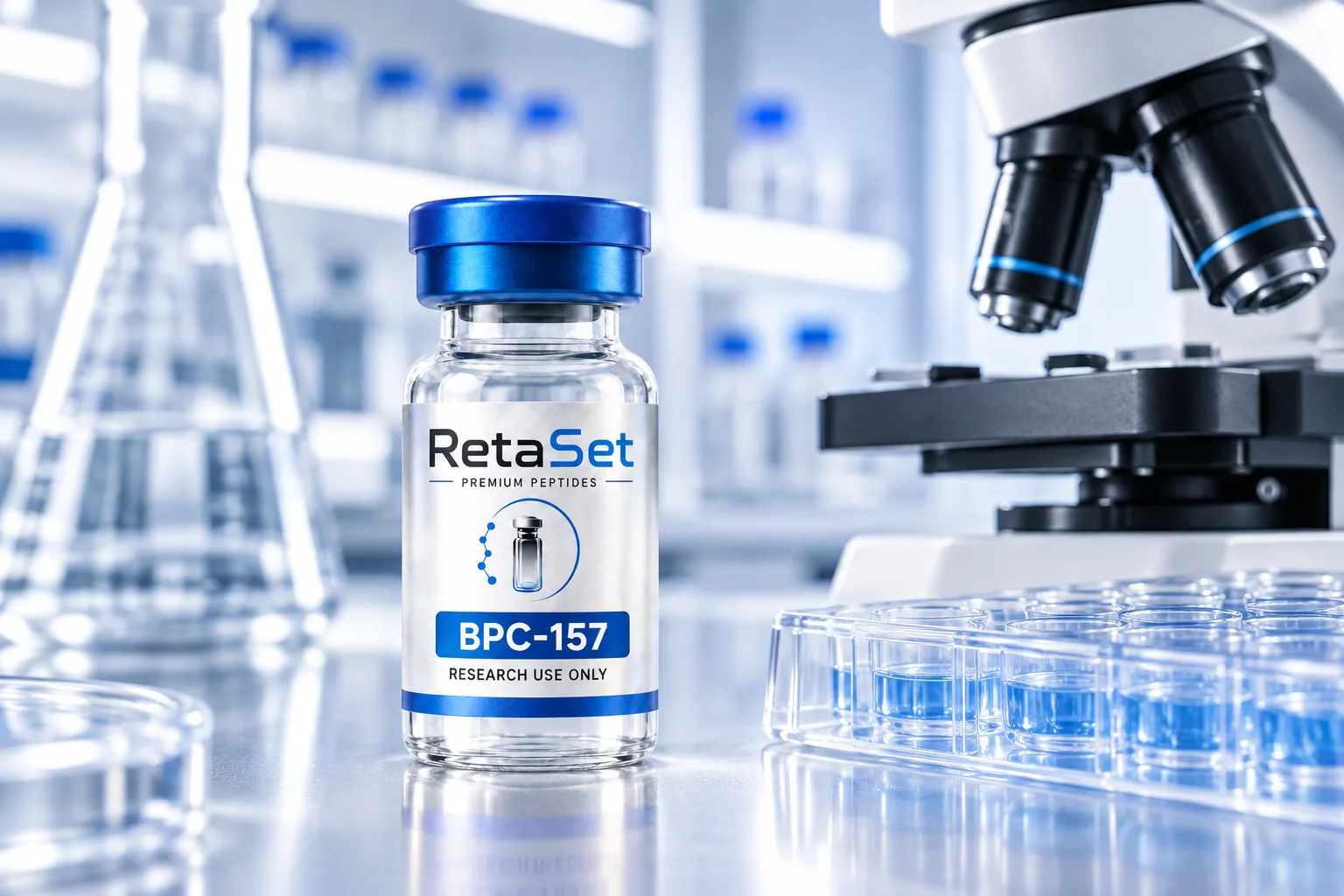
Use the highlighted BPC-157 listing to review the current research-material offer, then confirm the documentation and destination-specific order terms. The live listing is the place to check current availability and price; this article’s fictional numbers are only a comparison exercise.
A research purchase is not a treatment plan. This framework evaluates laboratory materials and quote completeness, without implying clinical suitability or a preferred supplier solely on price.
Common questions
How much does BPC-157 peptide cost?
There is no single comparable price without specifying quantity, material requirements and order terms. Check current listings or a written quote, then compare like-for-like delivered costs. The example here uses fictional figures.
Is the lowest price per milligram always the cheapest option?
No. A larger purchasing unit can have a lower unit price but require more total spending than a smaller pack that meets the project’s need.
Can I calculate peptide quantity from a purity percentage alone?
No. Purity, net peptide content and the basis of the supplied quantity must be understood separately. Ask how the quantity was defined and measured.
Explore research materials
Review the current BPC-157 laboratory-material listing and available documentation in the Research Peptide Catalog. Compare its stated specifications and actual order terms; the example prices in this guide are fictional.
Product links support research procurement only. Availability and specifications can change. Contact RetaSet for missing product documentation. Read the shipping policy.